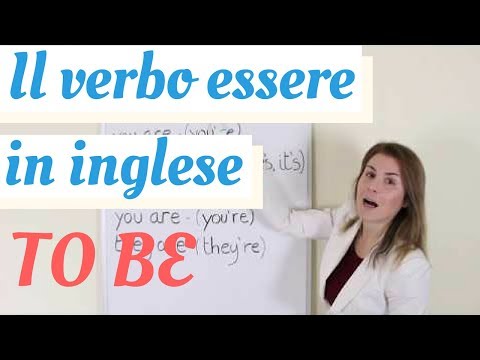
Il verbo "to be" al presente: am, is, are
In inglese il verbo "to be" (essere) ha tre forme al presente: am con I, is con he/she/it, are con you/we/they. Serve a collegare il soggetto a un nome, un aggettivo o un luogo, come in "She is a doctor." o "We are friends.". Nel parlato si usa quasi sempre la forma contratta: I'm, you're, he's, she's, it's, we're, they're; per esempio "I'm tired." invece di "I am tired.". Attenzione all'errore più comune per chi parla italiano: in inglese il verbo non si può omettere mai, quindi non si dice "She happy" o "I from Brazil", ma sempre "She is happy" e "I am from Brazil".
Esempi
- I'm tired. the speaker feels tired
- She is a doctor. her job is doctor
- We are friends. the people are friends
La lezione completa
Tutto il video, in testo.
-
In molte lingue puoi dire semplicemente lei felice o io dal Brasile. In inglese è sbagliato — e la soluzione è sempre lo stesso piccolo verbo.
-
Quel verbo è to be. È il primissimo verbo che ti serve in inglese, e ha tre forme al presente. Impara queste tre e potrai già costruire frasi vere.
-
Ecco tutto lo schema. I vuole am. He, she e it vogliono is. E you, we e they vogliono are. Solo tre forme per ogni soggetto.
-
Che cosa fa davvero to be? È un verbo copulativo. Collega il soggetto a chi o cosa è, a una qualità o a un luogo.
-
Vediamolo. Con I usa am — qui mi collega a una sensazione. I am tired.
-
Con she, he o it usa is. Qui la collega a un lavoro. She is a doctor.
-
Con we, you o they usa are. Qui ci collega tra di noi. We are friends.
-
Funziona anche per il luogo. You vuole are, anche per una sola persona. You are at home.
-
E it vuole is — per le cose, il tempo atmosferico, l'ora. It is cold today.
-
Ora la parte che ti fa suonare naturale. Nel parlato reale, l'inglese contrae quasi sempre to be. I am diventa I'm, she is diventa she's, we are diventa we're.
-
Quindi la frase del medico, come la dice davvero la gente, suona così. She's a doctor.
-
Ecco la grande trappola. Molte lingue omettono il verbo — lei felice, io dal Brasile. In inglese non puoi mai lasciare fuori to be. Il verbo deve esserci.
-
Quindi ricorda: I am, he, she, it is, e you, we, they are. Non ometterlo mai — e nel parlato, contrailo.