Prepositions of Time: In, On, At
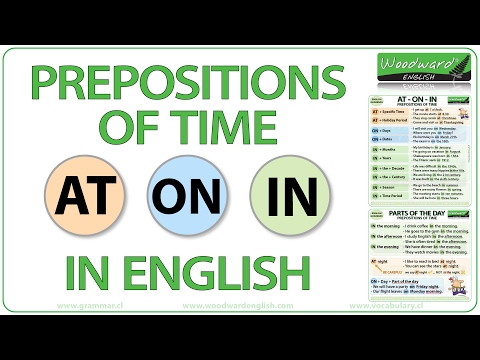
English uses three small prepositions to say when something happens, and they follow a clear pattern. Use 'at' for clock times and points in the day, as in "The meeting is at 3 o'clock." Use 'on' for specific days and dates, as in "I was born on a Sunday." Use 'in' for longer periods such as months, years, and seasons, as in "We travel in July." Watch the famous exception: we say 'at night' but 'in the morning', 'in the afternoon', and 'in the evening'.
Examples
- The meeting is at 3 o'clock. the meeting starts at 3
- I was born on a Sunday. the speaker's birth day was a Sunday
- We travel in July. the trip is in the month of July
The full lesson
Everything in the video, in text.
-
Is it at Monday? On May? In six o'clock? If those sound wrong — good.
-
English marks time with three words — at, on, and in. Picture a funnel: from wide stretches of time down to one exact point.
-
Here's the whole pattern at once. Use in for long periods, on for days and dates, and at for clock times and exact points.
-
Start at the narrow end. A precise clock time takes at. The meeting is at 3 o'clock.
-
Any exact point on the clock works the same way. I wake up at 7.
-
Step up to a single day, and the word becomes on. I was born on a Sunday.
-
A full date is still one day on the calendar, so on stays. The party is on July 5th.
-
And when a day teams up with a part of it, the day wins — it's still on, not in. We meet on Monday morning.
-
Now widen out to a whole month, and you switch to in. We travel in July.
-
Years and seasons are wide too, so they also take in. She was born in 2010.
-
Parts of the day are stretches as well — morning, afternoon and evening all take in. I read in the morning.
-
But watch this famous exception. Every part of the day takes in — except night. Night flips to at.
-
And never swap the categories. A month is never on, a day is never in. Just match the size of the time to the word.
-
So zoom through the funnel: in for long periods, on for days and dates, at for the clock — and at night.