Have to vs Must: Talking About Obligation in English
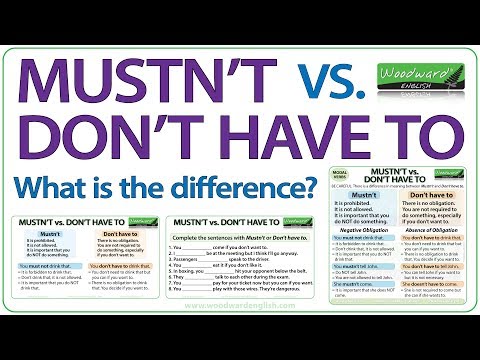
'Have to' and 'must' both express obligation, but with a difference in feel: 'must' often signals a strong personal or internal need, while 'have to' usually points to an external rule, as in "I have to work on Saturday." The trickiest part is the negative, where the two split completely in meaning. 'Mustn't' means something is forbidden, so "You mustn't smoke here" is a prohibition, while 'don't have to' means something simply isn't necessary, so "You don't have to pay" leaves you free to choose. Mixing these two up reverses your meaning, so it pays to learn the contrast carefully.
Examples
- I have to work on Saturday. an external obligation to work
- You mustn't smoke here. smoking is forbidden here
- You don't have to pay. paying is not necessary
The full lesson
Everything in the video, in text.
-
You mustn't go and you don't have to go sound similar — but they're opposites. One forbids it. The other says it's optional.
-
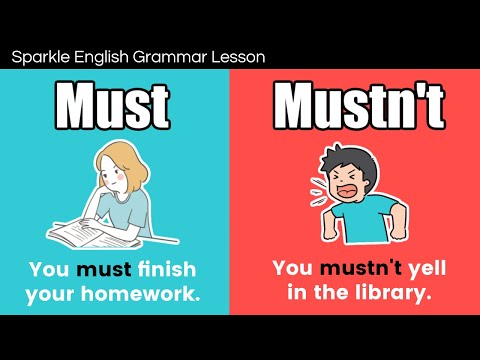
Both have to and must express obligation — something you need to do. In the positive, they're usually interchangeable. The split shows up in two places.
-
First split: where the obligation comes from. Must tends to be personal — you putting pressure on yourself. Have to tends to be external — a rule, a law, someone else's order.
-
Internal obligation — it matters to me, so I use must. I must call my mum tonight.
-
External obligation — a rule decides it, not me. Use have to. I have to wear a uniform at work.
-
And only have to changes for he, she, and it. It becomes has to. She has to work on Saturday.
-
Now the big one — the negative. This is where most learners slip, because the two flip to completely different meanings.
-
Mustn't means forbidden. There's a strong line you can't cross. You mustn't smoke here.
-
Don't have to means the opposite — it's simply not necessary. You can if you want; no one's stopping you. You don't have to pay.
-
So watch the trap. You mustn't go forbids it — stay away. You don't have to go frees you — go if you like. Swap them and you tell someone the exact opposite of what you mean.
-
One more pair to lock it in. Forbidden, then optional — same situation, opposite rule. Visitors mustn't feed the animals.
-
So: must is personal, have to is external — but in the positive, pick either. The thing to never confuse: mustn't is forbidden, don't have to is optional.